
Rivers of Light
Steel Plaza Station, Platform Level
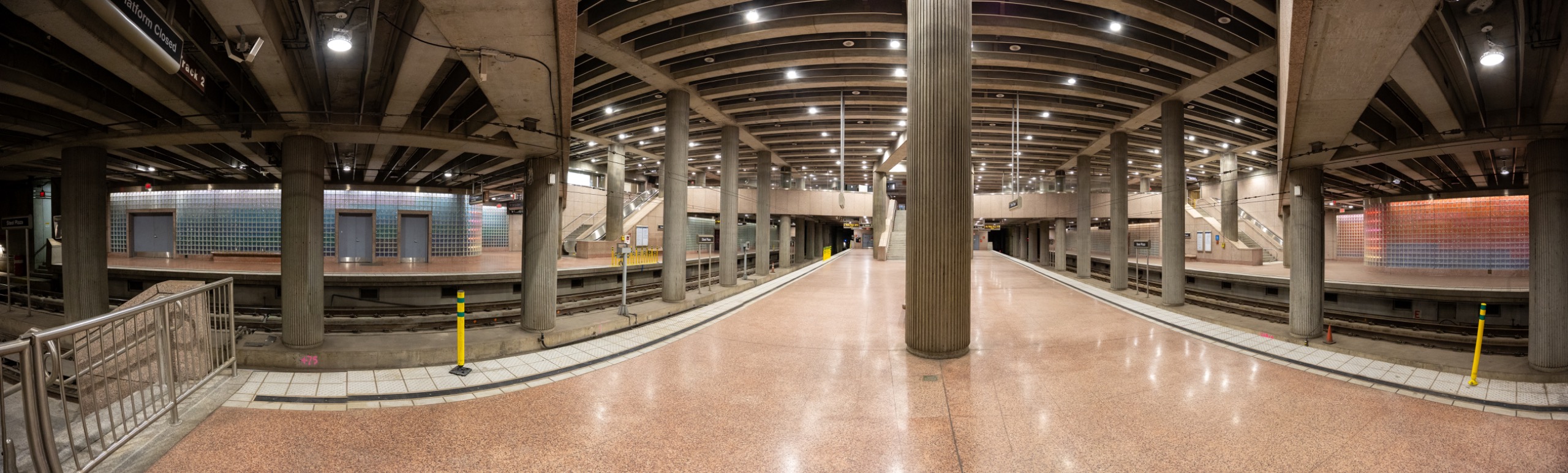
Photo: XXX
About the Project
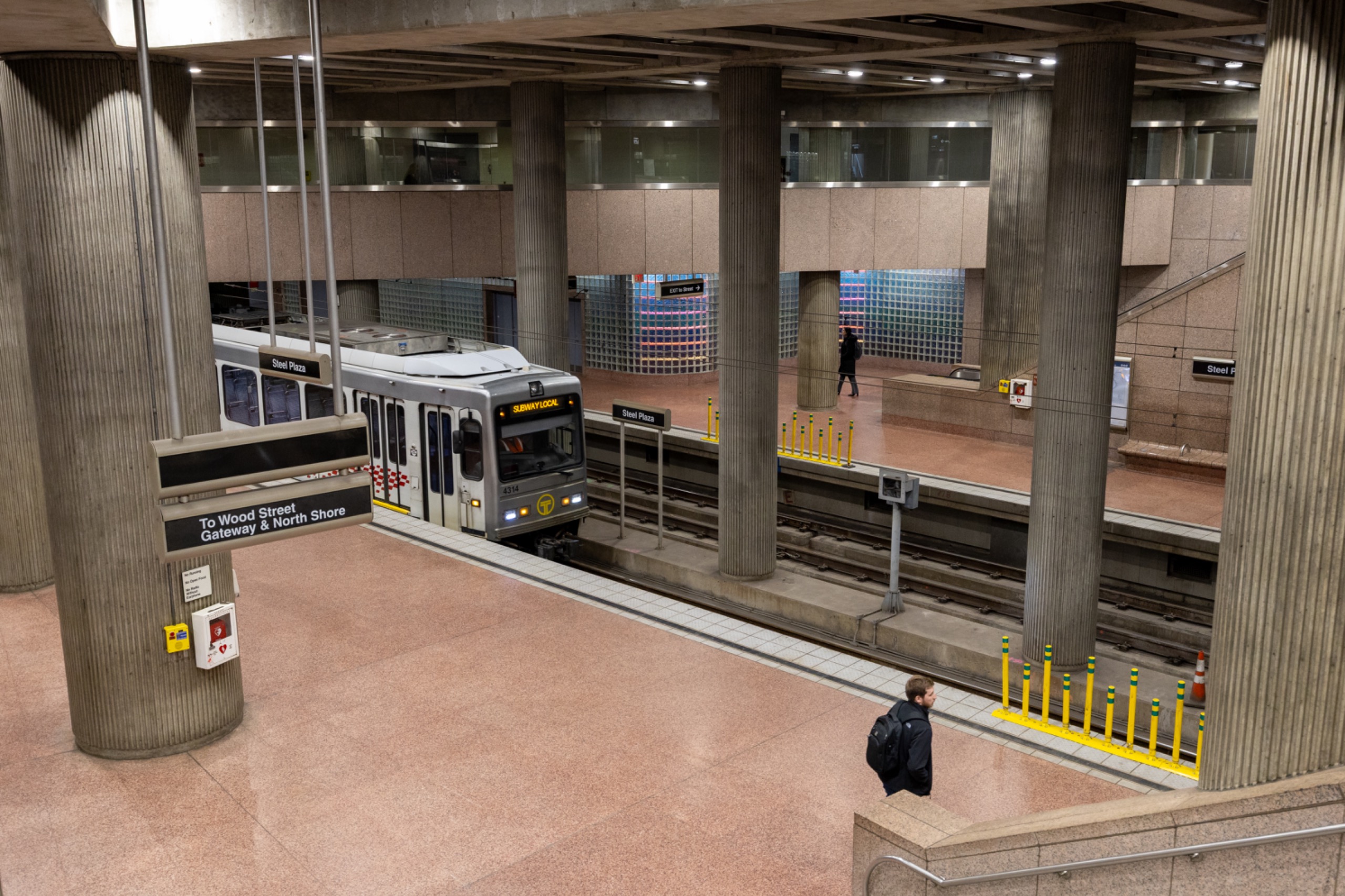
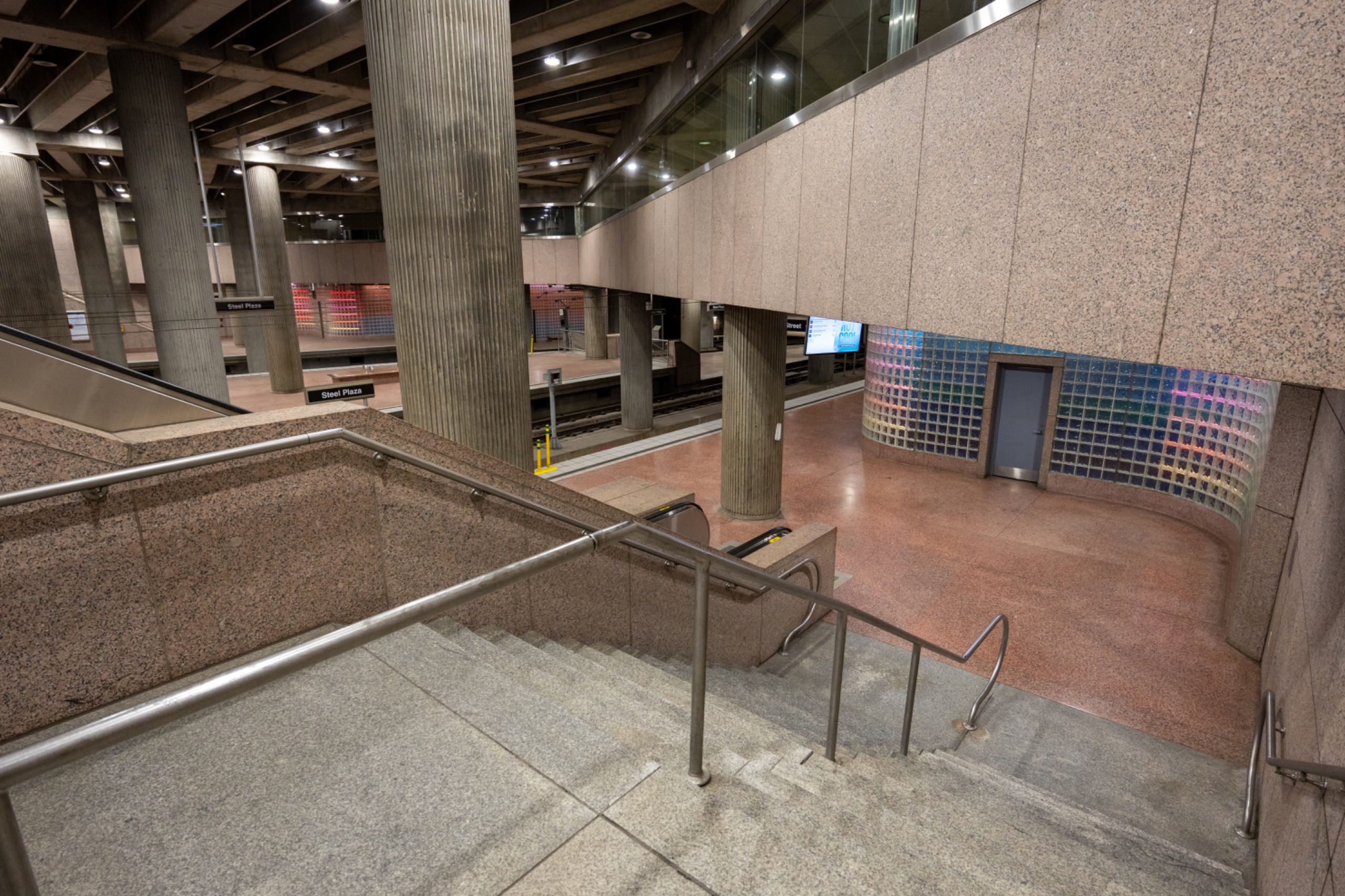
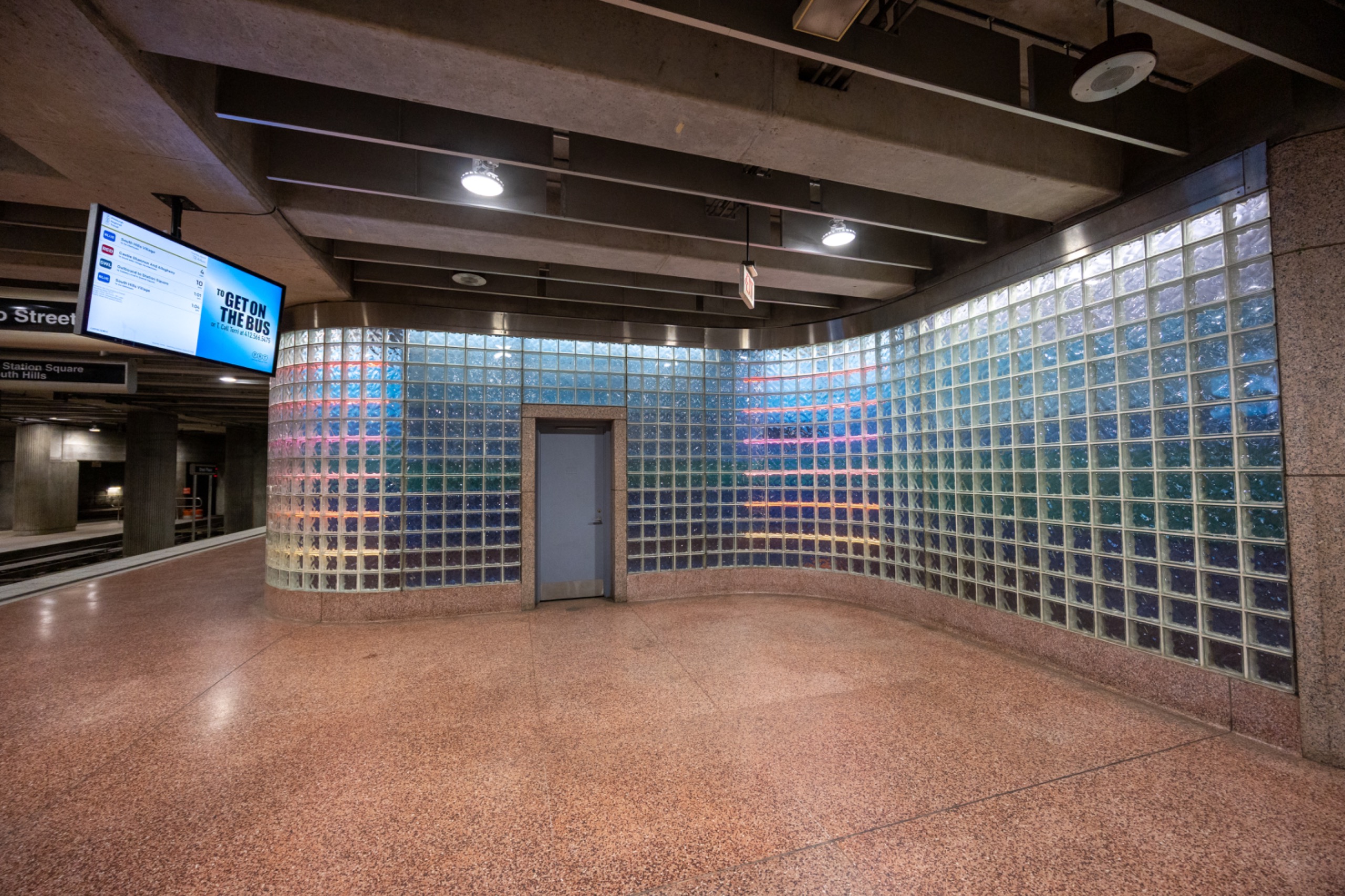
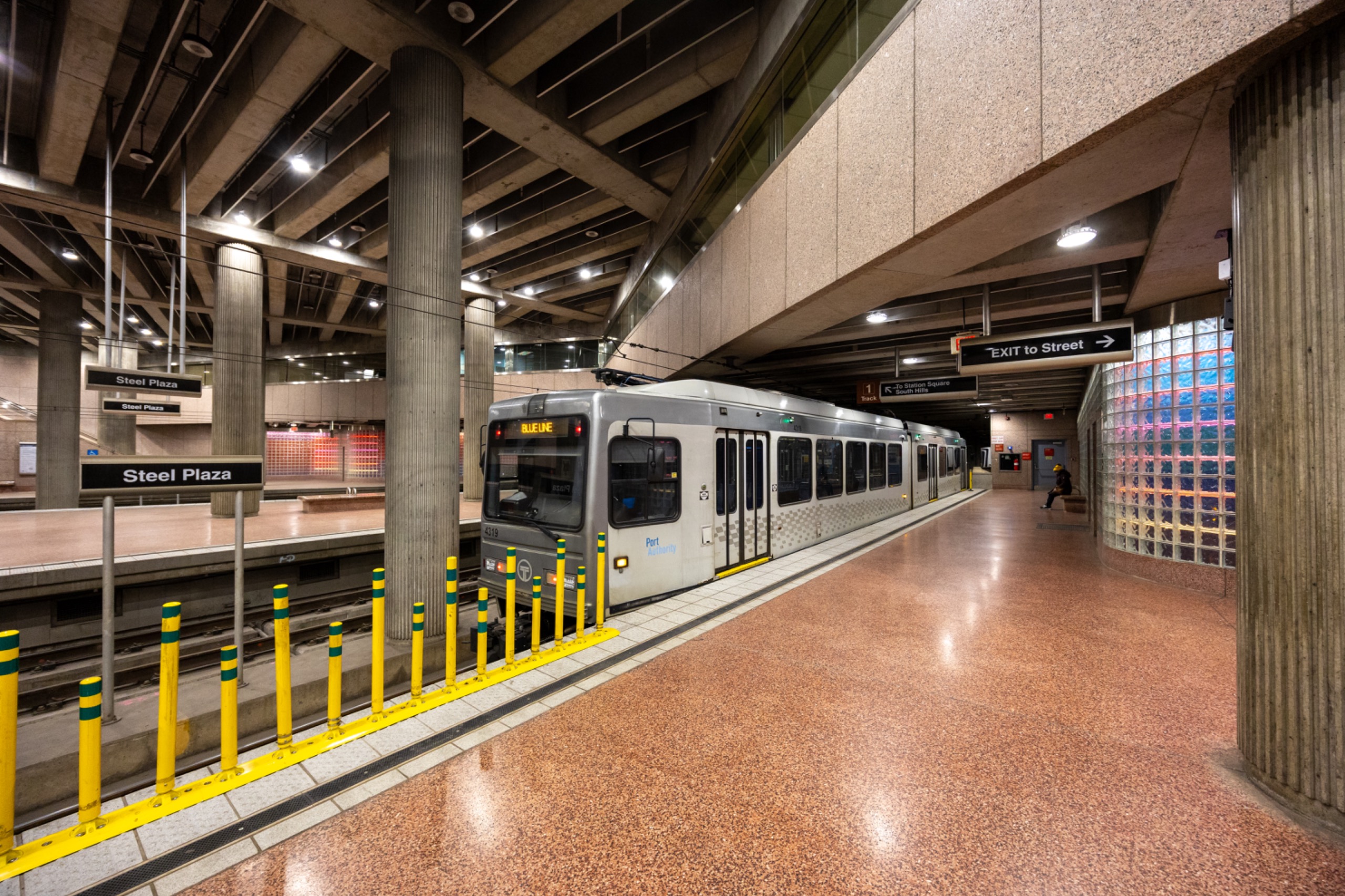
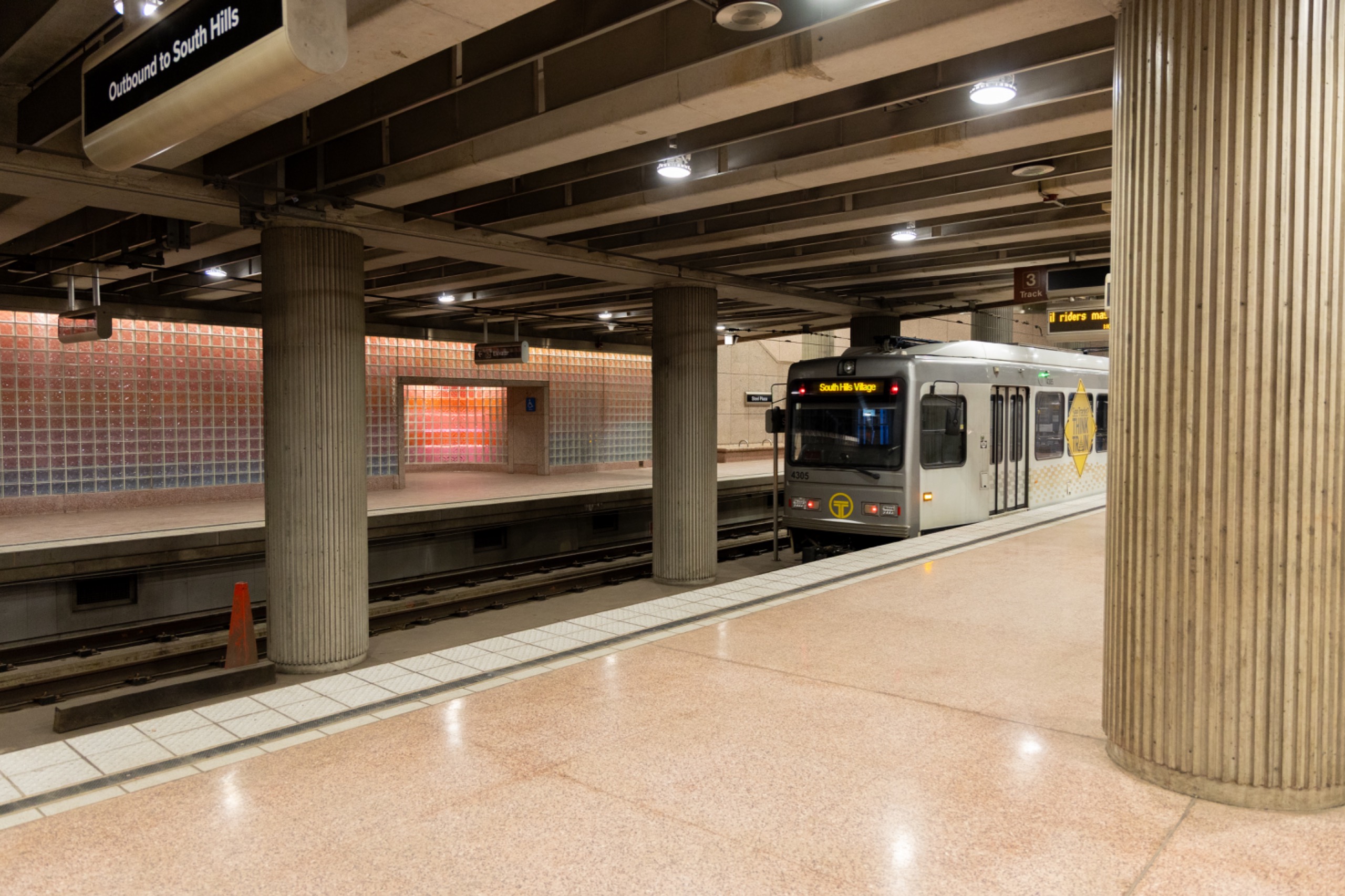
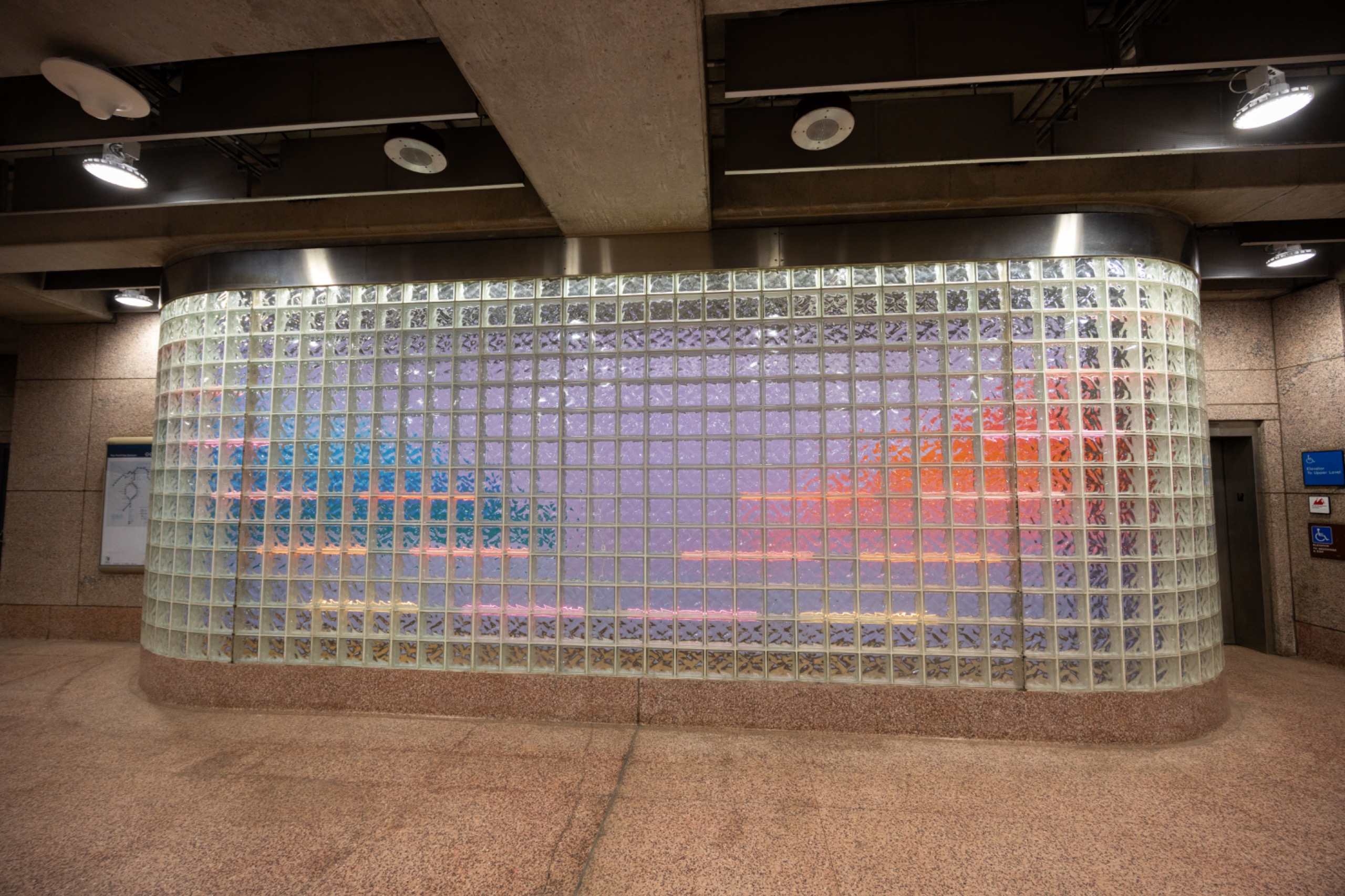
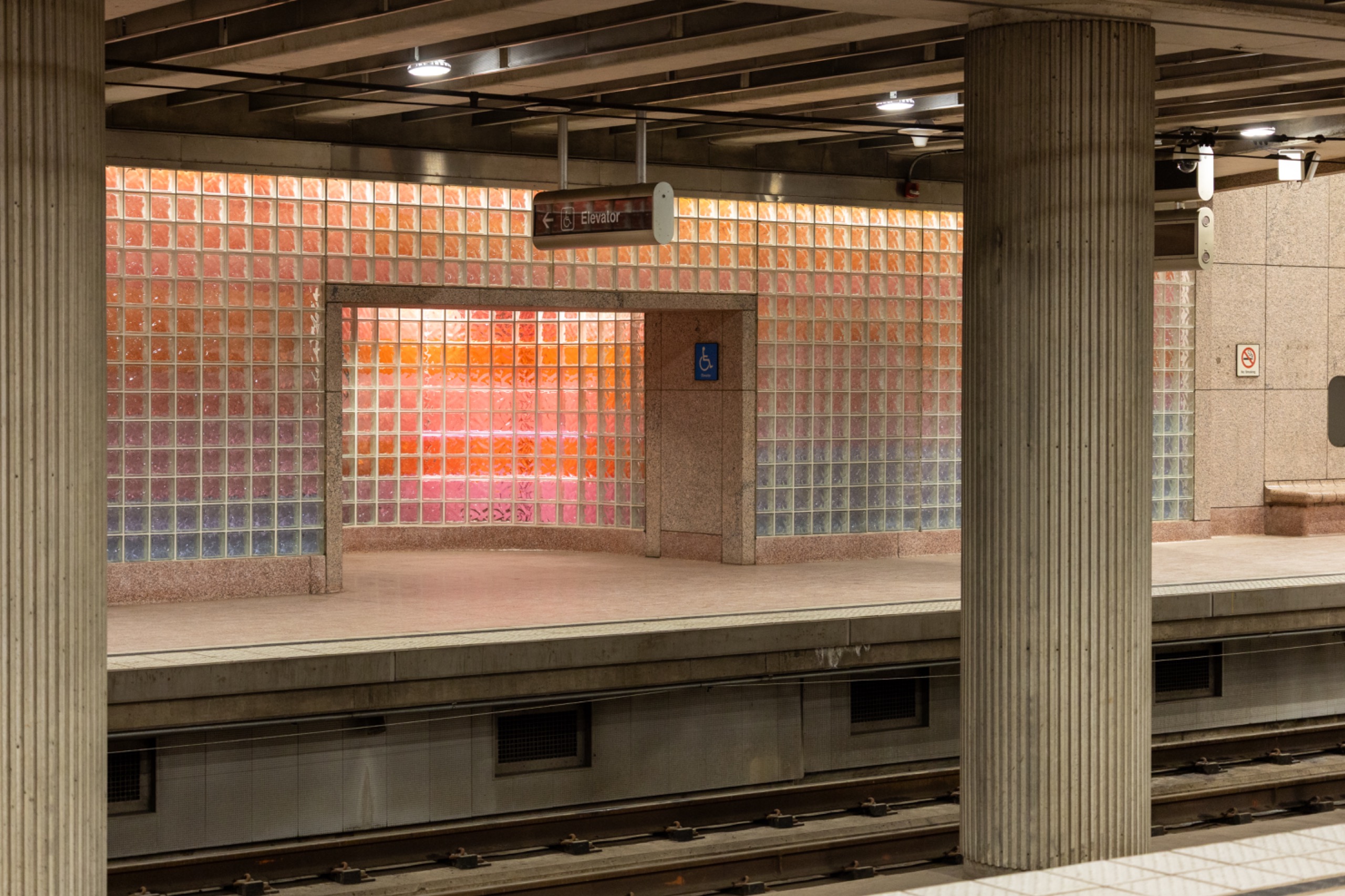
Rivers of Light is an immersive environment of color and light located at the platform level of Steel Plaza Station in Downtown Pittsburgh. Spanning approximately 5,000 square feet behind glass block walls, the installation transforms the transit space into a dynamic, ever-shifting experience.
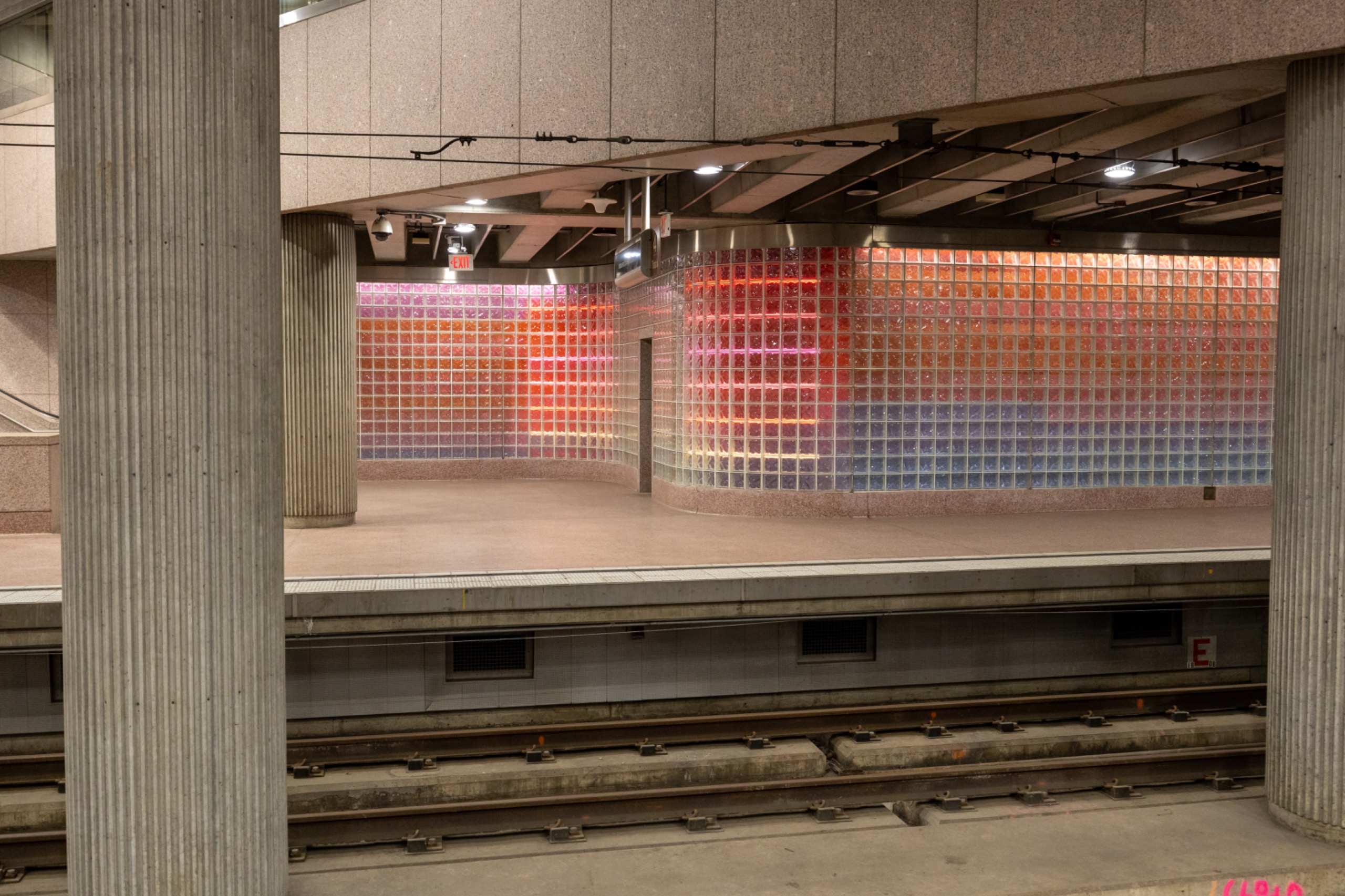
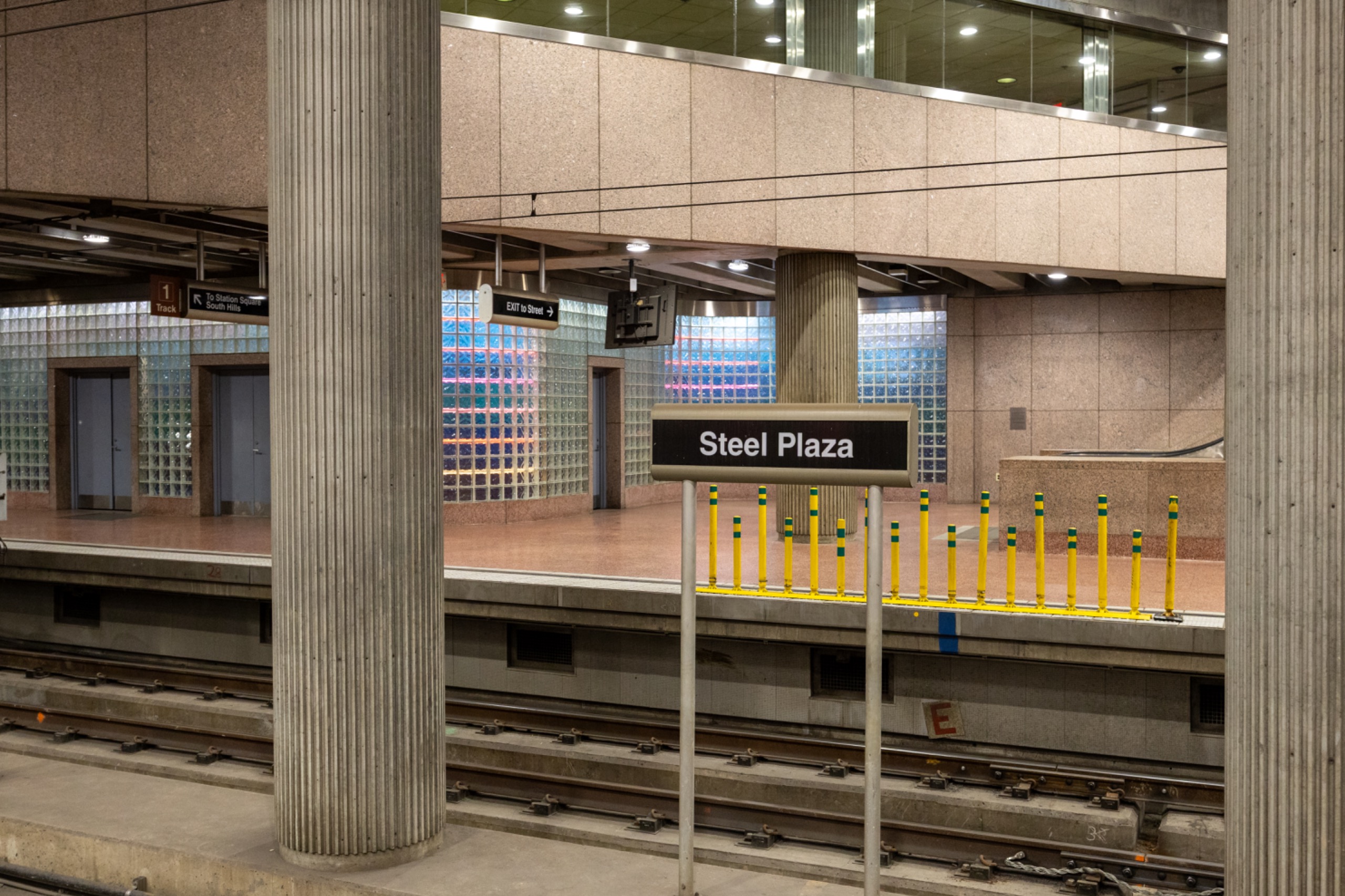
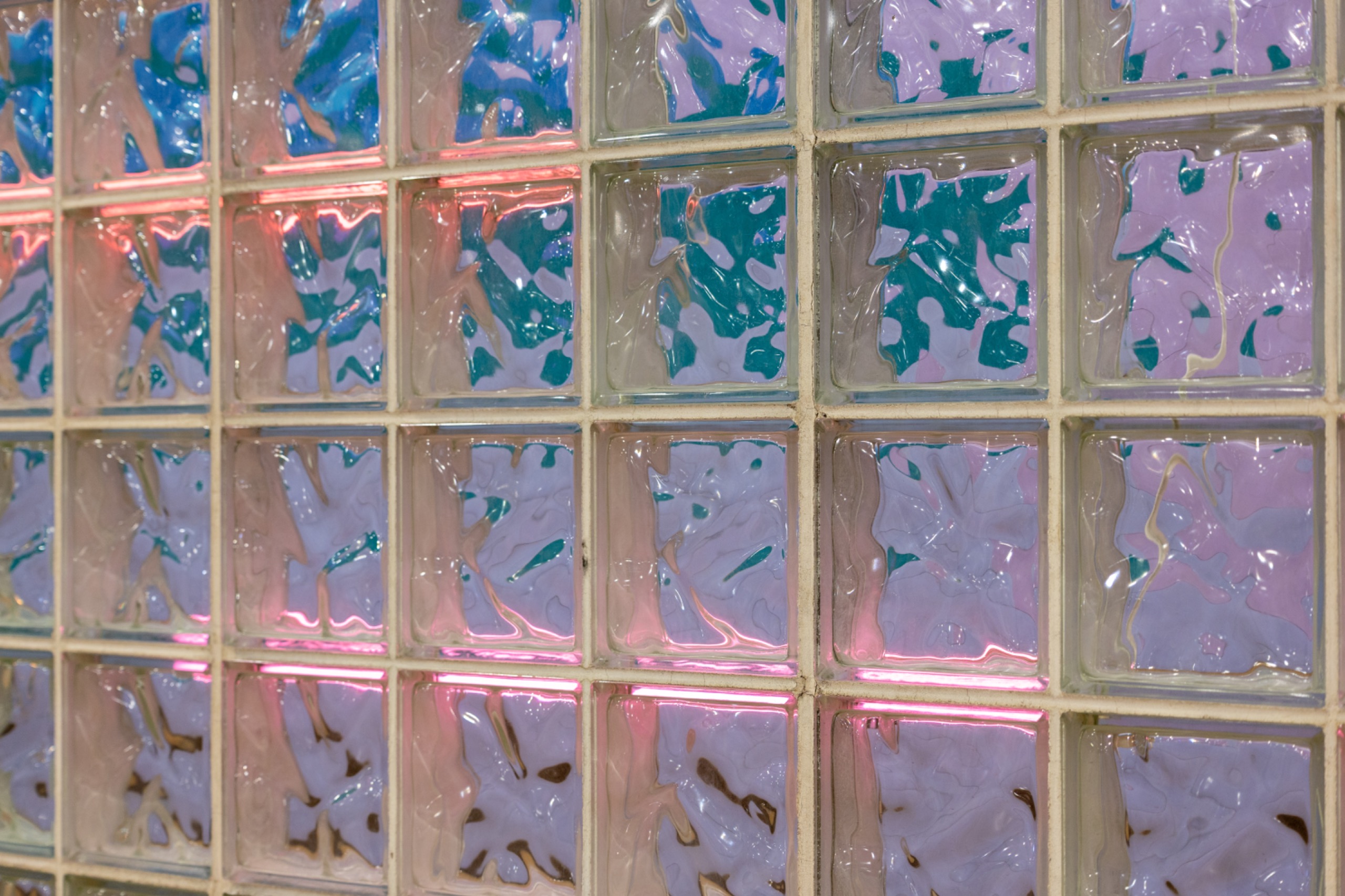
Aluminum wall panels situated behind the glass blocks are painted in a pattern designed by the artist using a palette of 15 vibrant colors. Haskell’s design responds directly to the station’s architectural features, drawing inspiration from the v-shaped platform and track alignment. Symbolizing the convergence of Pittsburgh’s three rivers at the Point, the work evokes the flowing movement of water from dawn to dusk through both color and illumination.
The east platform walls are painted in warm hues—reds, pinks, and violets—while the west platform features cooler tones of blues, greens, and recurring violets, creating a chromatic balance across the space. Enhancing this visual rhythm, neon tubes are installed in seven locations throughout the installation. These lights are programmed on a timer and dimmer system: warm neon tones glow during the early morning hours, while cool neon colors emerge in the evening. This gradual transition of color and light creates a subtle, meditative atmosphere that echoes the natural progression of daylight and reinforces the artwork’s connection to the city’s rivers and rhythms.
Image 1 of 10
About the Artist
Jane Haskell (1923–2013) was a distinguished Pittsburgh-based artist known for her groundbreaking use of color and light, particularly through neon and other luminous media. Over the course of her career, she transformed architectural spaces into immersive environments, using light not just as a visual element, but as both material and metaphor.
Haskell’s work explores the emotional and psychological impact of color, often creating contemplative, atmospheric experiences that invite viewers to pause, reflect, and engage with their surroundings in new ways. Her thoughtful integration of light and space set her apart as a visionary in the field of public art.
In addition to her artistic practice, Haskell was a generous philanthropist and a passionate advocate for the arts in Pittsburgh. She played an active role in the city’s cultural life, supporting institutions and initiatives that expanded access to the arts.
Her innovative approach and deep civic engagement earned her lasting recognition, with works exhibited in museums, galleries, and civic spaces throughout the area. Today, her legacy continues to shape Pittsburgh’s cultural landscape, inspiring future generations of artists and audiences alike.